
Artificial Intelligence is no longer experimental or limited to tech teams. Today, it influences how businesses make decisions, interact with customers, automate operations, and extract insights from data. As AI becomes part of everyday business workflows, one question keeps coming up: how do we make sure AI is used responsibly?
This is where governance becomes essential. Without clear guardrails, AI systems can quietly introduce bias, make decisions that are hard to explain, or expose organizations to compliance and reputational risks.
To address this growing need, ISO/IEC 42001:2023 introduces a dedicated management system for Artificial Intelligence. Instead of focusing only on technology, the standard looks at how AI should be governed—covering people, processes, and oversight—so that AI systems remain ethical, safe, and transparent throughout their lifecycle.
More importantly, ISO/IEC 42001 provides a common language for AI governance. It helps organizations move from ad-hoc controls to a structured and auditable approach, where accountability and trust are built into AI operations from the start.

What is ISO/IEC 42001:2023?
ISO/IEC 42001:2023 is the first international standard created specifically to help organizations manage AI systems through an AI Management System (AIMS). It applies whether an organization is building AI models in-house, using third-party AI tools, or relying on AI features embedded in enterprise software.
Rather than prescribing how to build AI, the standard focuses on how AI should be governed across its lifecycle—from design and deployment to monitoring and improvement.
Key areas covered by the standard include:
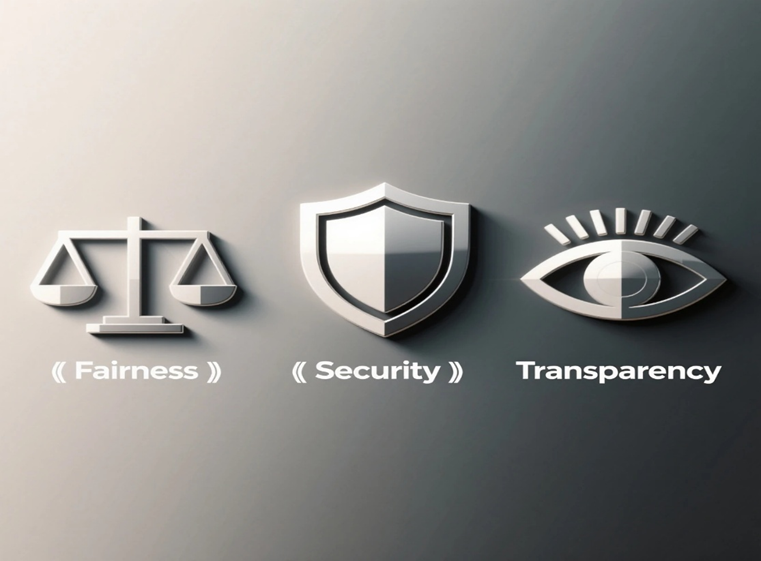
- Reducing bias and promoting fairness in AI outcomes
- Improving transparency and explainability of automated decisions
- Ensuring data quality and reliability
- Managing safety, security, and system resilience
- Addressing privacy and data protection concerns
- Defining human oversight and accountability
- Continuously monitoring AI performance and risks
Because of this broad scope, ISO/IEC 42001 is relevant to organizations of all sizes and across industries.
Why AI Governance Matters Today
As AI adoption increases, so do the risks that come with it. When AI systems are not properly governed, organizations may face challenges such as:
- Biased or unfair decisions that impact customers or employees.
- Black-box models that no one can fully explain.
- Privacy breaches or misuse of sensitive data
- Gaps between AI usage and regulatory expectations
- Operational failures caused by unstable or poorly monitored models.
- Loss of trust among users, regulators, and stakeholders
AI governance is no longer just a technical concern—it is a business and leadership responsibility. ISO/IEC 42001:2023 helps organizations address these issues by setting clear expectations for how AI should be managed responsibly.
Preparing for ISO/IEC 42001: Key Steps for Organizations
Organizations looking to align with ISO/IEC 42001 do not need to start from scratch. The journey typically begins with a few practical and achievable steps.
1. Identify and Classify AI Systems
Start by listing all AI applications used across the organization, including internal tools, vendor solutions, and embedded AI features.
Once identified, classify them based on their purpose, business impact, and potential risk.
2. Assess Risks and Impacts
For each AI use case, evaluate risks such as bias, lack of explainability, data privacy concerns, and operational dependency.
This helps determine where stronger controls or human oversight may be needed.
3. Define Ownership and Accountability
Clearly assign responsibility for AI systems, covering areas such as development, approval, monitoring, and escalation.
This ensures AI decisions are not “ownerless” and can be challenged or reviewed when needed.
4. Establish AI Policies and Guidelines
Develop or refine policies that define acceptable AI use, data handling practices, and ethical expectations.
These policies should align with ISO/IEC 42001 and integrate with existing governance frameworks.
5. Monitor, Review, and Improve
Set up ongoing monitoring to track AI performance, risks, and unintended outcomes over time.
Regular reviews help ensure AI systems continue to behave as expected as data, models, and contexts change.
6. Build Awareness Across Teams
Train employees involved in AI development, deployment, and decision-making on responsible AI practices.
Creating awareness ensures governance is not limited to compliance teams but shared across the organization.

Conclusion
AI has the potential to deliver enormous value, but only when it is deployed with care and accountability. ISO/IEC 42001:2023 offers a practical framework for organizations that want to move beyond informal controls and adopt a structured approach to trustworthy AI.
By following the principles of this standard, organizations can improve transparency, reduce AI-related risks, and show regulators, customers, and partners that they take responsible AI seriously. In an era where trust matters as much as innovation, strong AI governance is becoming a true competitive advantage.
Reference Links