Cryptocurrency-Mining Botnet Attack SSH Service Running IoT Devices

SSH Service

Newly discovered cryptocurrency mining bot targeting the Internet of Things (IoT) devices which contain SSH service and IoT-related ports, including 22, 2222, and 502.

Cryptocurrency-mining malware consumes the system resources and utilizes them for mining cryptocurrencies without user permissions.

This crypto-mining attack will work for all the connected devices and servers that running under SSH service.

SSH service provides the secure connection for IoT (Internet of Things) refers to devices that are connected to the Internet.

Attackers using Various social Engineering tricks to compromise victims and Monero and Ethereum coins to gain huge profits using another device.

The uncovered bot mainly searches for the device that running with open Remote Desktop Protocol (RDP) port and taking advantages of vulnerable devices and run the script that download & install the malware.

Botnet Infection process on SSH Service

Initially, botnet host the malicious script using specific website and the script will download the files from hxxps://www[.]yiluzhuanqian[.]com/soft/Linux/yilu_2_[.]tgz and save it into the temp folder.

This is one of the widely using exploitation technique against Linux-based servers and this bot is able to load miners on Linux.

Script downloaded site appears to be financial scam site and the attacker using sophisticated techniques that helps switch to another domain to continue operations if the link is blocked at any cost.

So once the downloaded malicious script will be executed then it first checks the internet connectivity the connect to Baindu.com after that, it checks the OS that running on the target and it specifically targets the Linux based operating system.

The huge page and memlock are also set up helps to enhance the more computational power to mining the cryptocurrency.

Once those are set up, the script downloads the miner, disguised as a download of a libhwloc4library and this miner using some persistence mechanism to keep running the miner even after rebooting the computer.

According to Trend micro report, The file cmd.txt lists commands used to run the “mservice” binary with parameters, which then installs the actual miner, “YiluzhuanqianSer.” (Note that the miner is related to the potential scam site domain.fig-8-yilu-hostname.jpg?resize=462%2C261&ssl=1Apart from this a conf.json file contains e web shell/backdoor and the additional directories includes two binaries and even a cmd.txt file that contains commands used to run the miner.

This type of mining operation that targets connected devices for profit is not the first of its kind. Moreover, security incidents that make use of bots to target IoT devices have made headlines on several occasions Trend Micro said.

Advanced ATM Penetration Testing Methods

ATM Penetration testing

ATM Penetration testing, Hackers have found different approaches to hack into the ATM machines. Programmers are not restricting themselves to physical assaults, for example, money/card catching, skimming, and so forth they are investigating better approaches to hack ATM programming.

An ATM is a machine that empowers the clients to perform keeping money exchange without setting off to the bank.

Utilizing an ATM, a client can pull back or store the money, get to the bank store or credit account, pay the bills, change the stick, redesign the individual data, and so on. Since the ATM machine manages money, it has turned into a high need focus for programmers and burglars.

In this article, we will perceive how do an ATM functions, security arrangements used to secure the ATMs, diverse sorts of infiltration testing to break down ATM security and a portion of the security best practices which can be utilized to evade ATM hack.

Also Read ATM Black box attacks – ATM Jackpotting

ATM Work Function :

Most of the ATMs have 2 input and 4 output. The card reader and keypad are input whereas a screen, receipt printer, cash dispenser, and the speaker are output.

There are for the most part two sorts of ATM’s which vary as indicated by the way they work. They can be called as

1.Rented line ATM
2.Dial-up ATM machines

Any ATM machine needs an information terminal with two data sources and four yield gadgets. Obviously, for this to happen there ought to likewise be the accessibility of a host processor. The host processor is important so that the ATM can interface furthermore speak with the individual asking for the money. The Internet Service Provider (ISP) additionally assumes an essential part in this activity. They go about as the passage to the halfway systems furthermore the bank PC.

Image Credit : HowstuffWorks

A rented line ATM machine has a 4-wire, indicate point committed phone line which assists in associating it with the host processor. These sorts of machines are favored in spots where the client volume is high. They are viewed as top of the line and the working expenses of this sort of a machine is high.

The dial-up ATM machines just has an ordinary telephone line with a modem and a toll free number. As these are typical associations their underlying establishment cost is less and their working costs just turn into a small amount of that of a rented line ATM.

The host is primarily claimed by the bank. It can likewise be claimed by an ISP. On the off chance that the host is possessed by the bank just machines that work for that specific bank will be upheld.

Also Read Undetectable ATM “Shimmers” Hacker’s Latest Tool for Steal your Chip Based Card Details


ATM BPT style penetration testing

Security professionals perform advanced penetration tests on automated teller machine (ATM) solutions in the financial sector. In most cases, serious security flaws are identified in the ATM configurations and associated processes.

ATMs test with our ‘Business Penetration Test’ (BPT) methodology, which simulates real attacks on ATM solutions. This includes carefully designed targeted attacks, which combines physical, logical and optionally social engineering attack vectors.

ATM security is often considered a complex area by IT security managers, who tend to focus more on the physical risks and less on the logical weaknesses in the operating system and application layer.

Meanwhile, ATM security is a business area that often lacks holistic security assessments. Our ATM tests are based on this belief, and seek to paint a holistic ) picture of your ATM environment.

Physical controls

Many banks rely heavily on the assumption that physical access to their ATM solutions is effectively restricted. In the meantime repeated, illustrates how little effort is often required to gain unauthorized access to the ATM CPU, which controls the user interface and transaction device.

Logical controls

With physical access to the ATM CPU, authentication mechanisms can be bypassed to gain unauthorized access to the ATM platform.

With this access, an attacker may be able to steal credit card data that is stored in file systems or memory, without ever alerting the bank. Furthermore, experts able to demonstrate, this unauthorized access can be expanded from the ATM to the bank’s network and back-end servers by using the compromised ATM as an attack platform.

ATM solution management processes associated with third party service providers and application development vendors are often the golden key for an attacker, and can be included in the scope of our test to identify logical weaknesses in trust relationships that an attacker can exploit to compromise an ATM.

ATM ecosystem

An ATM solution and network form a complex ecosystem that consists of different vendors and responsible agents, both internal and external to the banking organization.

Due to the complexity of this ecosystem with its distributed roles and responsibilities that cross organizational boundaries, the areas associated with security risk are often overlooked. The ATM application itself, with its software updates, operating system patches, platform hardening, and networks, is often vulnerable to attacks.

These attacks are not necessarily sophisticated and often not included in standard penetration tests.

Security Best Practices to be followed for ATM

The banks can implement security best practices to reduce the attack surface for the attacker. This section can be categories into three categories:

1.Protection against physical attacks:

  • Detection and protection against Card skimming.
  • Detection and protection against card/ cash trapping.
  • Detection against keypad tampering.
  • Mirror and pin shield to identify and prevent shoulder surfing attack.
  • Implementing a DVSS camera inbuilt in the ATM to capture facial features of the user along with transaction details and timestamp.
  • Vault protection against fire, explosion, etc.
  • Lock protection again unauthorized access to banknotes or bills.
  • Electric power point and network point protection.
  • Disabling unused network and electric port.
  • The ATM must be grouted on the floor to secure against threats related to the robbery. ATM can be implemented with shock sensor to identify the impact and movement of ATM machine.
  • Implementation of CCTV camera. The presence of security guard.

2 . Protection against logical attacks:

  • Protection against unauthorized booting by setting non-guessable boot and BIOS password. Most of ATM have default boot password configured.
  • Protection against USB and unauthorized hard disk access.
  • OS hardening and latest patch.
  • Whitelisting the application, services, and process on ATM.
  • Running ATM with least privilege user. Need to know and need to have approach.
  • File integrity checks.
  • Securing the transaction logs.
  • Use of secure channel for the communication and transaction.
  • Configure security best practices in ATM application.
  • Antivirus protection.
  • ATM network segregation with other networks.
  • Protection against Malware like tyupkin, ploutus, etc.

3 . Protection against fraud attacks:

  • Implementation of geo-blocking. In this implementation, the card can only be used in originating country or region. The user has to take permission to use the card outside the originating country.
  • Implementation of chip and pin based card to mitigate copied and skimming card based attack.
  • Implementing a behavior mentoring which detects the unusual transaction in term of the amount, place of transaction, frequency of transaction, etc.

Assessment of ATM Security Solution installed in the ATM:

ATM security solutions

Most of the ATMs run on Windows XP and 7. Patching individual ATM is a quite complex process. Since Windows XP is no longer supported by Microsoft, many ATM vendor uses security solution to mitigate the threats related to ATM attacks such as Malware-based attacks, OS-level vulnerabilities. These security solutions allow the ATM application to run in very restrictive environment with limited services and processes in the back end. Two of such security solutions are Mcafee Solidcore and Phoenix Vista ATM.

Mcafee Solidcore:

McAfee Application Control blocks unauthorized executables on servers, corporate desktops, and fixed-function devices. Using a dynamic trust model and innovative security features such as local and global reputation intelligence, real-time behavioral analytics, and auto-immunization of endpoints, it immediately thwarts advanced persistent threats—without requiring labor-intensive list management or signature updates.

  • Complete protection from unwanted applications with coverage of executable files, libraries, drivers, Java apps, ActiveX controls, scripts, and specialty code.
  • Flexibility for desktop users and server admins with self-approval and auto-approval based on application rating.
  • Viable security for fixed-function, legacy, and modern systems.
  • Patch cycle reduction and advanced memory protection.
  • Centralized, integrated management via McAfee ePolicy Orchestrator.

Phoenix Vista ATM:

Phoenix Vista ATM is a product of Phoenix Interactive Design Inc .This solution integrates with the ATM application itself. This application works on file integrity check where any modification/tampering with the application related critical file will result in a system shutdown. This disallows any unauthorized program to modify the application specific file.

XFS (extensions for Financial Services) provides a client-server architecture for financial applications on the Microsoft Windows platform, especially peripheral devices such as ATM’s which are unique to the financial industry. It is an international standard promoted by the European Committee for Standardization (known by the acronym CEN, hence CEN/XFS). XFS provides a common API for accessing and manipulating various financial services devices regardless of the manufacturer.

Vista ATM communicates with the XFS layer which gives commands to the hardware like cash dispenser of the ATM to dispense the cash. Any unauthorized modification in XFS files will trigger the Vista ATM application to restart the machine forcefully. The machine restarts 4-5 times, and after that, it goes into maintenance mode which does not allow the user to perform any transaction.

Mobile is the new frontier for malicious bots

Distil Networks analyzed over 100 million mobile devices on its networks. The findings suggest that sophisticated cybercriminals and bot operators now implement a new technique—leveraging mobile devices – to avoid detection and execute a number of nefarious acts. At this time, 5.8 percent of all mobile devices across six major cellular networks are used in such automated attacks and represent eight percent of all bad bot traffic.

mobile malicious bots

This bad bot traffic is purposefully deployed against any business with a web presence to carry out acts that include web scraping, brute force attacks, competitive data mining, online fraud, account hijacking, data theft, spam and digital ad fraud.

Uncovered by the Distil Research Lab, the data reveals a new method by which perpetrators connect through cellular gateways to target a large variety of websites and apps simultaneously. Cellular gateways handle a huge volume of requests per minute, many of which are legitimate, making it difficult to identify and block criminal ones.

Within some cellular carriers, a single IP address can cater to more than 4,000 devices per day, making cellular traffic an ideal location for bots to remain undetectable. As mobile devices move through different gateways, (based on device owners changing location throughout the day,) bots effectively change identities to make detection even more difficult.

Mobile bots by the numbers:

  • Sample size: Over 100 million devices
  • Number of mobile carriers researched: Six
  • Percentage of mobile ISP gateways used in bad bot attacks: 44 percent
  • Percentage of total bad bot traffic deriving from mobile devices on cellular networks: 8 percent
  • Percentage of mobile devices making bad bot requests on cellular networks: 5.8 percent
  • Average number of bad bot requests by each device per day: 50.

mobile malicious bots

Mobile is the new frontier for bot operators, as they can perform highly advanced attacks while remaining hidden in plain sight,” said Rami Essaid, chief product and strategy officer at Distil Networks. “Whether inadvertently downloaded through an email attachment, or embedded in a seemingly legitimate app, millions of consumers unknowingly carry malware on their devices that allows cybercriminals to conduct bot attacks, abuse and fraud. We have seen bot operators develop and enhance their techniques throughout the years, but the threat to mobile devices is real and growing, and can have detrimental consequences.

Twitter gets physical – with support for hardware security keys

Twitter has given millions of users a way of making their accounts even harder to hack, with the introduction of support for physical keys.

Most Twitter users protect their accounts in the traditional way: username and password. As with any other internet account, such security is vulnerable to a number of threats including phishing or a user unwisely choosing the same password that they use elsewhere on the internet.

This is the primary reason that so many Twitter accounts have been compromised by hackers over the years.

High profile victims have included FC Barcelona, CNN, Burger King, Google CEO Sundar Pichai, Wikipedia’s Jimmy Wales, and Mark Zuckerberg.

One of the most notorious hijackings of a Twitter account occurred in 2013, when the Syrian Electronic Army managed to gain control of Associated Press’s Twitter account and posted a message saying that there had been an explosion at the White House and Barack Obama had been injured.

That bogus report knocked 61 billion dollars (briefly) off the Dow Jones Index.

If you’re sensible you have taken better steps than just a password to protect your Twitter account, and enabled two-step verification in the form of “Login Verification”.That adds an extra hurdle to the login process by asking for a code generated by a third-party app such as Google Authenticator and Authy to be be entered.

For most people, this level of protection is probably enough.

But what if you want to go even further, and wish to ensure an even high level of physical security to your Twitter account?

If that’s you then you’ll be interested to read news inside a blog post detailing Twitter’s latest steps to combat spam and abuse on the site.

Twitter has revealed that you can now use a physical USB security key which supports the universal two-factor (U2F) standard when signing in for login verification.

The small keyfobs require the logging-in user to physically press a button to confirm the identity, and because it will only work on the real Twitter website it provides a high level of protection against phishing sites.

Other websites which support FIDO U2F hardware keys – which are the same size and shape as a typical USB thumb drive – include Google, Facebook, Dropbox, GitHub, and SalesForce.

Cisco plugs critical flaws in many switches, security appliances.

Cisco has released security updates to address a bucketload of vulnerabilities affecting multiple products, including 24 critical and high-severity flaws found in many of its switches, next generation firewalls and security appliances.

Cisco switches critical flaws

Those vulnerabilities are present in the Cisco NX-OS Software, which enables network automation and programmatical provisioning and configuration of the devices via APIs, and Cisco FXOS (Firepower eXtensible Operating System).

“Successful exploitation of the vulnerabilities could allow an attacker to gain unauthorized access to an affected device, gain elevated privileges for an affected device, execute arbitrary code, execute arbitrary commands, gain access to sensitive information, or cause a denial of service (DoS) condition on an affected device,” the company explained.

They can be exploited via specially crafted packets (HTTP or HTTPS, Cisco Fabric Services, SNMP, IGMP) and messages (Cisco Discovery Protocol and BGP update messages).

Twelve of the vulnerabilities affect both Cisco FXOS Software and Cisco NX-OS Software and the remaining vulnerabilities affect only Cisco NX-OS Software. None of the vulnerabilities affect Cisco IOS Software or Cisco IOS XE Software.

There are no workarounds for the vulnerabilities, so administrators should implement the offered updates.

Virus-free. www.avg.com

This Highly Popular Android App Converts Your Video To Audio Easily On The Move

A 5-minute high-definition music video can easily take up a space of more than 45 megabytes but an mp3 file of the same length, say, at a bitrate of 128 kbps, may just consume 5 megabytes of mobile storage, that is 9 times lesser.

If your mobile storage is running out due to keeping many video files, it’s time to convert them into audio to save space when you just want to play or share music files without needing videos.

To do that, many converters are available for you but Video to MP3 Converter offered by AccountLab is one of the most popular with more than 10 million downloads from the Google Play Store.

The Converter is very easy to use for average users with a slider to adjust the sound quality without bothering the terms of VBR and CBR. For more demanding users, it provides a selection of various bitrates for sound encoding in advanced mode.

As a bonus, the app also incorporates a video cutter and an audio cutter, both are easy to operate.

The app available on Android devices is free to download and use with supporting ads  Read More

Read the Full Article here: >Gizmos Freeware Reviews

The Key IoT Security Questions You Need To Ask

Microsoft IoT Security

An Internet of Things (IoT) solution offers a multitude of business benefits from decreased operational costs to new revenue streams. But it also comes with a host of security considerations, including an ever-changing array of regulatory compliance requirements, demanding expert navigation and acute attention to detail.

Below I’ve listed some of the critical questions to ask when deploying a secure IoT solution. To learn more about IoT security, be sure to register for the IoT in Action event in San Francisco on February 13.

How secure are your things?

For starters, the actual devices must be secure. In the next few years, a new wave of innovation will drive down costs and inundate the market with internet-connected devices in every price range, from electronic toys to manufacturing sensors. In anticipation of this, my Microsoft colleagues have identified The seven properties of highly secure devices. I have listed out each of these properties below, along with the fundamental questions you must ask:

  1. The hardware-based root of trust: Does each device have a unique identity that is inseparable from the hardware?
  2. Small trusted computing base: Is most of the device’s software outside its trusted computing base?
  3. Defense in depth: Does your device software have multiple layers of protection built-in?
  4. Compartmentalization: Are you using hardware-enforced barriers to stop failures from propagating to other components?
  5. Certificates-based authentication: Do your devices use certificates (vs. passwords)?
  6. Renewable security: Can the device’s software be updated automatically to a more secure state?
  7. Failure reporting: Do you have a solution in place to report software failures to the manufacturer?

How secure are your connections? 

More to the point, when you’ve got a bunch of devices talking to each other over the internet, how will you safeguard data confidentiality and integrity? When choosing an IoT monitoring and connection solution, make sure that it is using industry-proven data encryption. Solutions like the Azure IoT Suite secure the internet connection between the IoT device and IoT hub using the Transport Layer Security (TLS) standard.

Another question to ask is how you will prevent unsolicited inbound connections from wreaking havoc on your devices? Make sure that only devices are allowed to initiate connections and not the IoT hub. And speaking of the IoT hub: make sure that the one you’re using has the capability of maintaining a per-device queue – meaning that it can store messages for devices and wait for the devices to connect. For more on this topic, be sure to read IoT security from the ground up.

How secure is your cloud solution?

Is your cloud provider following rigorous security best practices? When choosing a cloud provider, make sure you pay careful attention to how they are handling the following areas.

  1. Network traffic segregation: Is IoT traffic segregated from other network traffic using an IoT gateway or other means?
  2. Monitoring: How is network traffic being monitored? How will you know if any credentials are compromised or if unmanaged devices are accessing your cloud services?
  3. Security controls: How well do you know your cloud provider’s SLA (service-level agreement)? Which security controls are being maintained by your provider and which will you need to address internally?
  4. Encryption and security key management: Does your IoT solution allow you to define access control policies for each security key? Is data in the cloud encrypted?

Have you registered for IoT in Action in San Francisco, CA on February 13, 2018?

These questions only scratch the broad surface of IoT security. To learn more about securing your IoT solution, register for this free, one-day event. You’ll hear from the researchers behind The seven properties of highly secured devices and see an IoT solution come to life before your eyes. You’ll also get insights into how Microsoft addresses IoT security through its Azure solutions. Plus, connect with partners who can help you bring your IoT solution from concept to reality. View the full agenda.

The post The Key IoT Security Questions You Need To Ask appeared first on ReadWrite.

Read the Full Article here: >ReadWriteWeb

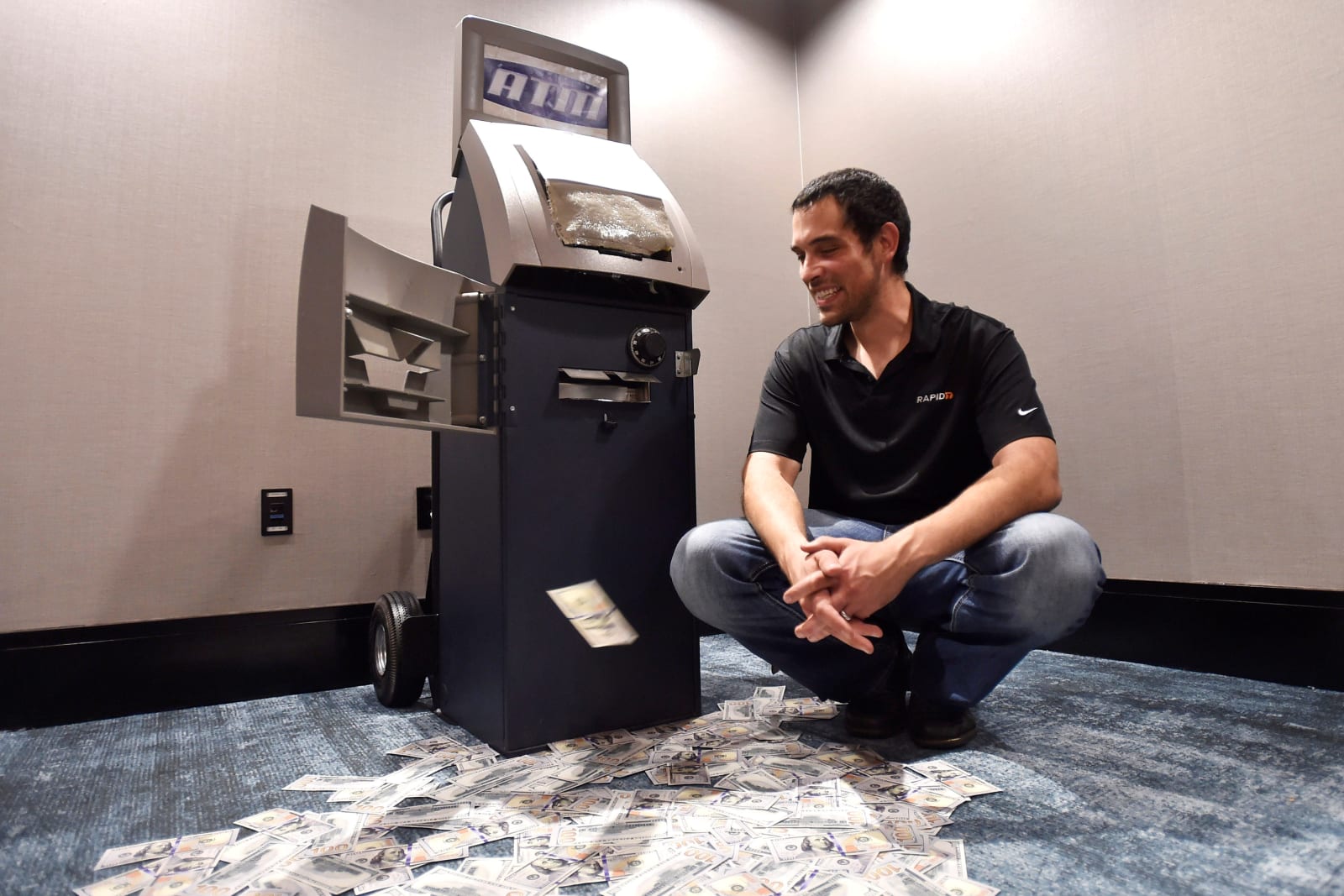
ATM ‘jackpotting’ hacks reach the US

For some ATM thieves, swiping card data involves too much patience — they’d rather just take the money and run. The US Secret Service has warned ATM makers Diebold Nixdorf and NCR that "jackpotting" hacks, where crooks force machine to cough up large sums of cash, have reached the US after years of creating problems in Asia, Europe and Mexico. The attacks have focused largely on Diebold’s front-loading Opteva ATMs in stand-alone locations, such as retail stores and drive-thrus, and have relied on an combination of malware and hardware to pull off heists.

In previous attacks, the thieves disguised themselves as technicians to avoid drawing attention. After that, they hooked up a laptop with a mirror image of the ATM’s operating system and malware (Diebold also mentioned replacing the hard drive outright). Security researcher Brian Krebs understands American ATMs have been hit with Ploutus.D, a variant of "jackpotting" malware that first launched in 2013. The mirror image needs to be paired with the ATM to work, but that’s not as difficult as you might think — the intruders used endoscopes to find and press the necessary reset button inside the machine. Once done, they attached keyboards and used activation codes to clean out ATMs within a matter of minutes.

NCR hasn’t been explicitly targeted in these attacks, but it warned that this was an "industry-wide issue" and urged caution from companies using its ATMs.

It’s definitely possible to thwart attacks like this. The Secret Service warned that ATMs still using Windows XP were particularly easy targets, and that updating to Windows 7 (let alone Windows 10) would protect against these specific attacks. Diebold also recommended updating to newer firmware and using the most secure configurations possible. And both organizations recommended physical security changes, such as using rear-loading ATMs, locking down physical access and closely watching for suspicious activity like opening the machine’s top.

The catch, of course, is that ATM operators either haven’t been diligent or may have a hard time justifying the updates. It’s telling that victim machines have been running XP, a 16-year-old platform whose official support ended in 2014 — the odds aren’t high that companies will keep their ATMs up to date, let alone replace them with more secure models or institute advanced defenses. You may not see a widespread attempt to combat jackpotting in the US until the problem becomes too large to ignore.

Via: Reuters

Source: Krebs on Security

Read the Full Article here: >Engadget

Google X Is Launching a Cybersecurity Company Called Chronicle

Google’s parent company Alphabet today announced the launch of Chronicle, a new cybersecurity company that aims to give companies a better chance at detecting and fighting off hackers. "Chronicle is graduating out of Alphabet’s X moonshot group and is now a standalone company under the Alphabet umbrella, just like Google," TechCrunch reports. From the report: Stephen Gillett, who joined X from Google Ventures and was previously the COO of Symantec, will be the new company’s CEO. To get started, Chronicle will offer two services: a security intelligence and analytics platform for enterprises, and VirusTotal, the online malware and virus scanner that Google acquired in 2012. Gillett writes that the general idea behind Chronicle is to eliminate a company’s security blind spots and allow businesses to get a better picture of their security posture. "We want to 10x the speed and impact of security teams’ work by making it much easier, faster and more cost-effective for them to capture and analyze security signals that have previously been too difficult and expensive to find," writes Gillett. "We are building our intelligence and analytics platform to solve this problem." What exactly this new platform will look like remains to be seen, though. Gillett notes that it will run on Alphabet’s infrastructure and use machine learning and advanced search capabilities to help businesses analyze their security data. Chronicle also says that it will offer its services in the cloud so that they can "grow with an organization’s needs and don’t add yet another piece of security software to implement and manage."


Share on Google+

Read more of this story at Slashdot.

Read the Full Article here: >Slashdot: News for nerds, stuff that matters